
Japanese instant noodles are easiest to choose by format, not by a single overall ranking. Cup Noodle is the familiar all-in-one soup cup; U.F.O. is a drained sauce yakisoba; Raoh uses non-fried noodles for a more ramen-like bowl; and Donbei moves into udon and soba, with regional broths that can differ between eastern and western Japan.
This guide compares ten currently relevant choices across those four Nissin families. The products are grouped by what they actually offer rather than by an invented score. No product was tested for this article. Product specifications come from current manufacturer information, while availability and images come from YUBI100’s Shopify catalog. Packaging and formulas can change, so the Japanese label on the item you receive remains the final reference.
Quick picks: the best Japanese instant noodles by format
| Product | Format | Flavor direction | Choose it when |
|---|---|---|---|
| Cup Noodle Original | Soup cup | Soy-sauce-based classic with meat, shrimp and egg toppings | You want the most recognizable starting point |
| Cup Noodle Seafood | Soup cup | Creamy, light-colored seafood-and-pork soup | You prefer a rounder seafood profile |
| Cup Noodle Curry | Soup cup | Thick, mild curry soup with potato | You want curry rather than a clear ramen-style broth |
| Nissin Yakisoba U.F.O. | Drained sauce noodles | Dark, concentrated yakisoba sauce | You want saucy noodles without soup |
| Raoh Shoyu | Premium-style soup bowl | Soy sauce with backfat-style richness in the current Japanese version | You prioritize non-fried noodles and a fuller bowl |
| Raoh Miso | Premium-style soup bowl | Rich miso in the current Japanese version | You want a miso-led ramen format |
| Donbei Kitsune Udon | Udon soup bowl | Dashi broth with seasoned fried tofu | You want thick udon and a sweet-savory topping |
| Donbei Curry Udon | Udon soup bowl | Curry broth | You want curry with udon rather than Cup Noodle-style noodles |
| Donbei Tempura Soba | Soba soup bowl | Dashi broth with tempura topping | You prefer soba and a crisp topping added at the right stage |
| Donbei Duck Broth Soba | Soba soup bowl | Duck-style savory broth | You want a deeper soba-broth direction |
There is no universal winner. For the simplest first purchase, choose one of the three Cup Noodle flavors. Pick U.F.O. when soup is not what you want. Choose Raoh when the noodle construction matters most, and choose Donbei when udon, soba or Japanese dashi is the main attraction.
First decide: soup cup, yakisoba, ramen, udon or soba?
The word “ramen” is often used loosely outside Japan, but these products do not all eat the same way. Format changes the preparation, texture and even the best situation for serving the meal.
| Family | What happens after hot water is added | Noodle style | Practical distinction |
|---|---|---|---|
| Cup Noodle | Water stays in the cup as soup | Fried cup noodles | Fewest preparation steps |
| U.F.O. | Water is drained before sauce is mixed in | Fried yakisoba noodles | Sauce-led and broth-free |
| Raoh | Water becomes ramen soup | Non-fried noodles in the current Shoyu and Miso versions | More emphasis on ramen-like noodle texture |
| Donbei Udon | Water becomes dashi or curry soup | Broad udon-style noodles | Thick noodles and Japanese soup formats |
| Donbei Soba | Water becomes soup | Soba-style noodles | Dashi-led bowl with soba toppings |
This distinction prevents the most common buying mistake: choosing by the package photo while overlooking how the product is meant to be prepared. U.F.O., for example, should not be treated like a soup noodle. Its lid is designed to help drain the hot water, after which the sauce and finishing seasoning are mixed through the noodles. Donbei Tempura Soba also rewards attention to the packet order, because the topping and seasonings may be intended for different stages. Always follow the printed lid and packet instructions for the exact item.
Nissin Cup Noodle: Original, Seafood and Curry
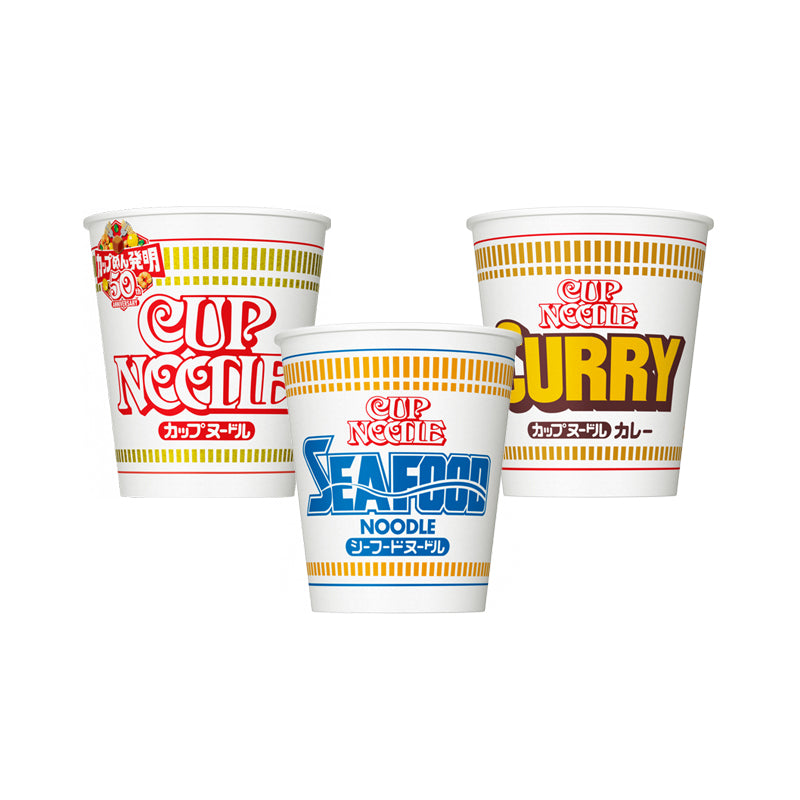
The YUBI100 Cup Noodle page places Original, Seafood and Curry on one product page as selectable variants. That structure is useful because the three cups share a compact, all-in-one format but deliver clearly different soups.
Cup Noodle Original
Original is the benchmark choice. Nissin’s current Japanese product page lists a 78-gram cup containing 65 grams of noodles. The manufacturer describes the toppings as soy-protein-based minced pork, seasoned pork, shrimp, egg and green onion. Its current preparation information specifies 280 milliliters of boiling water, while the nutrition panel lists 364 kilocalories and 4.6 grams of salt equivalent per serving.
Those figures identify the current manufacturer listing; they should not be used to override a different figure printed on an imported or revised package. For buying purposes, the more durable point is its structure: seasoned noodles, a soy-sauce-led soup and several familiar toppings in one cup. It is a sensible reference product for anyone trying Japanese Cup Noodle for the first time.
Cup Noodle Seafood
Seafood is not simply Original with an extra seafood packet. Nissin describes the current soup as a creamy, light-colored combination of pork and seafood flavor. The listed toppings include squid-like processed seafood, squid, crab-flavored fish cake, egg, cabbage and green onion. The current cup is 75 grams with 60 grams of noodles, and the brand listing gives 338 kilocalories. The product page calls for 300 milliliters of boiling water.
Choose Seafood when you want a softer, creamier soup direction and a mixture of seafood-style toppings. Anyone with allergies should read the exact package carefully: “seafood flavor” is not a complete allergen statement, and the product contains multiple animal-derived and grain ingredients.
Cup Noodle Curry
Curry is the most obviously different of the three. Nissin’s current page describes a thick, mild curry soup with potato, soy-protein-based minced pork, seasoned pork, carrot and green onion. The current listing is 87 grams with 60 grams of noodles, 423 kilocalories and 4.2 grams of salt equivalent, prepared with 290 milliliters of boiling water.
Its thicker soup makes it the choice for a curry mood, but it is still Cup Noodle rather than curry udon. Compare it with Donbei Curry Udon if noodle width and Japanese udon texture matter to you. The current Japanese Curry allergen list is also broad, including wheat, egg, dairy, peanut, sesame, soy, chicken, pork and apple. Check the received label because allergen declarations and recipes can be revised.
Nissin Yakisoba U.F.O.: the drained-noodle pick
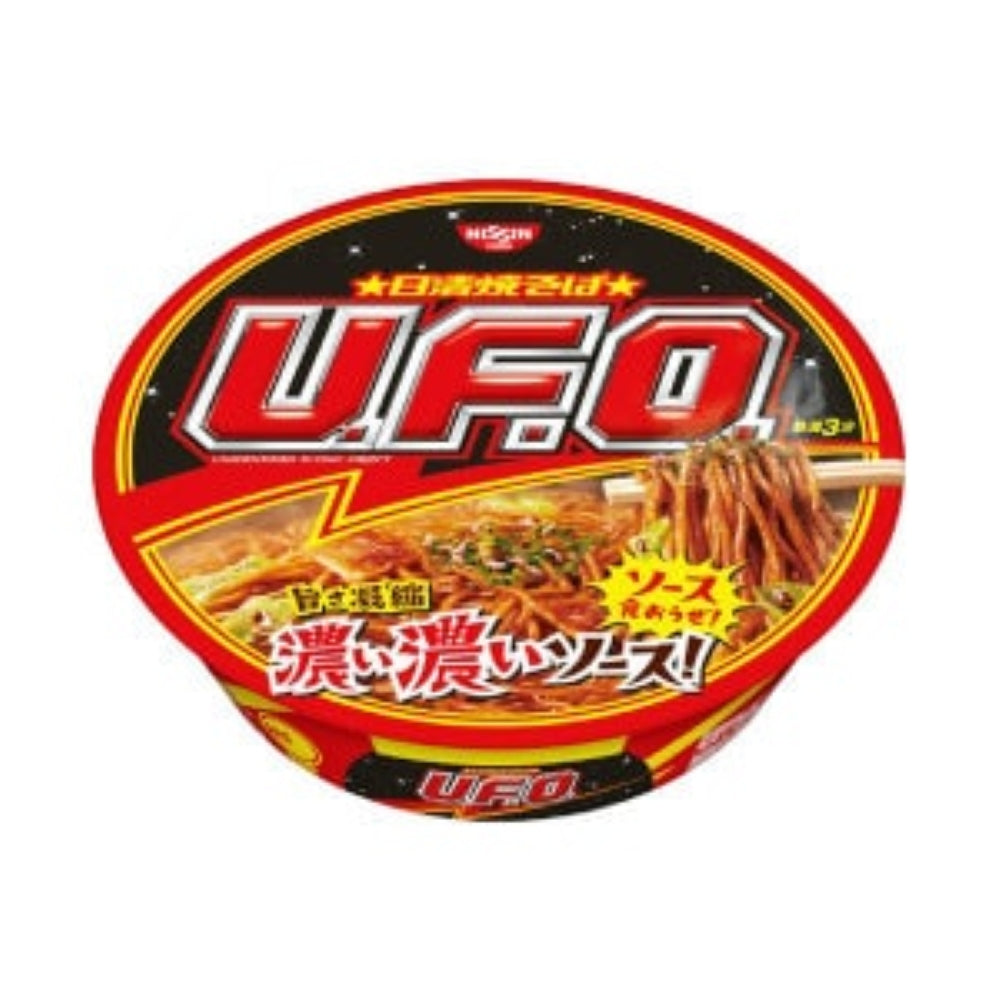
Nissin Yakisoba U.F.O. belongs in an instant-noodle comparison, but it should not be compared as though it were another soup cup. Hot water softens the noodles and is then drained. The concentrated sauce is mixed through afterward, producing a glossy, sauce-forward bowl.
Nissin’s current standard Japanese U.F.O. page lists 128 grams total with 100 grams of noodles, 555 kilocalories and 460 milliliters of required boiling water. It describes a thick sauce accompanied by large-cut cabbage and pork, with an aonori and red-ginger finishing seasoning. These current specifications are useful for recognizing the standard item, although shoppers should still match them against the physical package because U.F.O. also appears in different sizes and limited editions.
The appeal of U.F.O. is concentration. With no soup diluting the sauce, it tastes and behaves differently from Cup Noodle or Raoh. That also makes preparation discipline important. Do not add the sauce before draining unless the label explicitly tells you to do so. Keep the lid secured, use the marked drainage area, and handle the cup away from your body to reduce the risk of hot-water spills.
U.F.O. is the clearest choice in this guide for readers who say, “I want Japanese instant noodles, but I do not want broth.” If you want soup, any of the other three families is a better fit.
Nissin Raoh: Shoyu or Miso for a ramen-style bowl
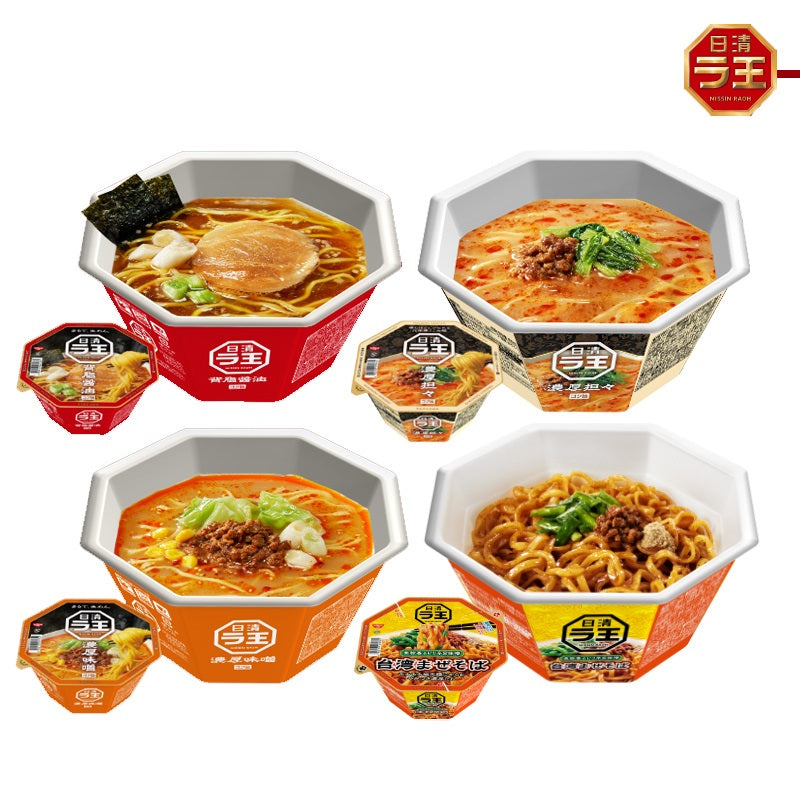
The YUBI100 Raoh page currently offers Shoyu and Miso variants. Raoh occupies a different position from the classic Cup Noodle trio: Nissin’s current Shoyu and Miso products use non-fried noodles, with noodle shape tailored to the soup.
Raoh Shoyu
The current Japanese product is named Raoh Backfat Shoyu. Nissin lists a 113-gram bowl with 75 grams of noodles and 400 milliliters of boiling water. The noodles are described as non-fried, medium-thick and straight. The current formula uses double-brewed soy sauce for part of its soy-sauce component and aims for a richer backfat-style soup.
This makes Shoyu the more direct pick for someone who wants soy sauce at the center of the bowl. It is not accurate to describe all shoyu ramen as light: the current Raoh version is deliberately richer. If your store variant or package name differs, rely on the printed description rather than assuming every Raoh Shoyu sold over time uses the same formula.
Raoh Miso
The current Japanese Miso is named Raoh Toro-juku Miso. Nissin lists 118 grams total, 75 grams of noodles and 400 milliliters of boiling water. Here the non-fried noodles are medium-thick and curly rather than straight. The manufacturer describes a rich miso soup and states that Hokkaido-brewed rice-koji miso accounts for part of the miso and powdered-miso component.
Choose Miso when fermented soybean depth is the main reason you are buying the bowl. Choose Shoyu when soy-sauce aroma and a straighter noodle are more appealing. Neither is automatically “better”; the useful difference is the soup base and noodle shape.
The YUBI100 image is an assortment image, while the active selections are Shoyu and Miso. Treat the variant selector and the package received as the authoritative identity of your purchase, not every flavor visible in a group image.
Nissin Donbei: udon, soba and dashi-led choices
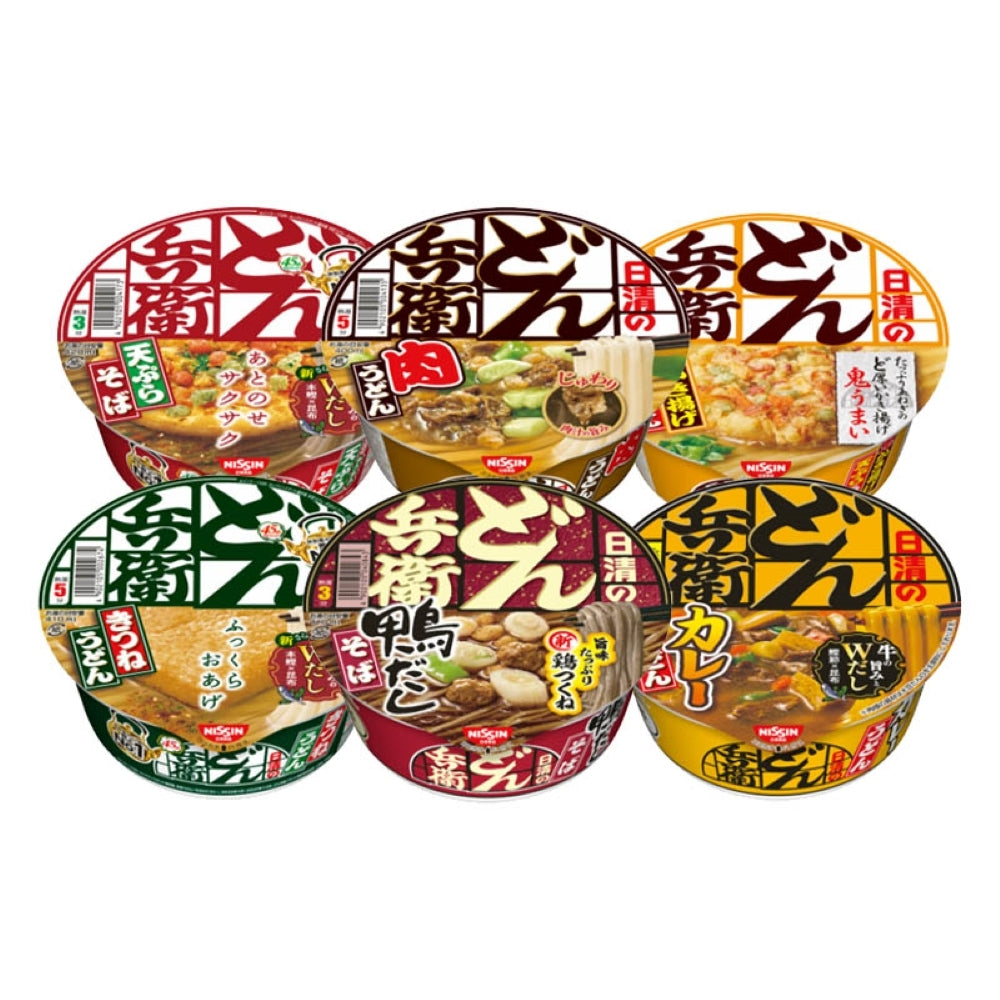
The Donbei six-variety page covers Kitsune Udon, Curry Udon, Meat Udon, Tempura Udon, Tempura Soba and Duck Broth Soba. This guide highlights four that make the major decisions easiest to understand.
Donbei Kitsune Udon
Kitsune Udon combines broad udon-style noodles, dashi broth and seasoned fried tofu. The tofu is not a decorative garnish; it is the defining topping. It absorbs soup and brings its own sweet-savory seasoning, so Kitsune is the Donbei choice for readers who want the classic tofu-and-udon pairing.
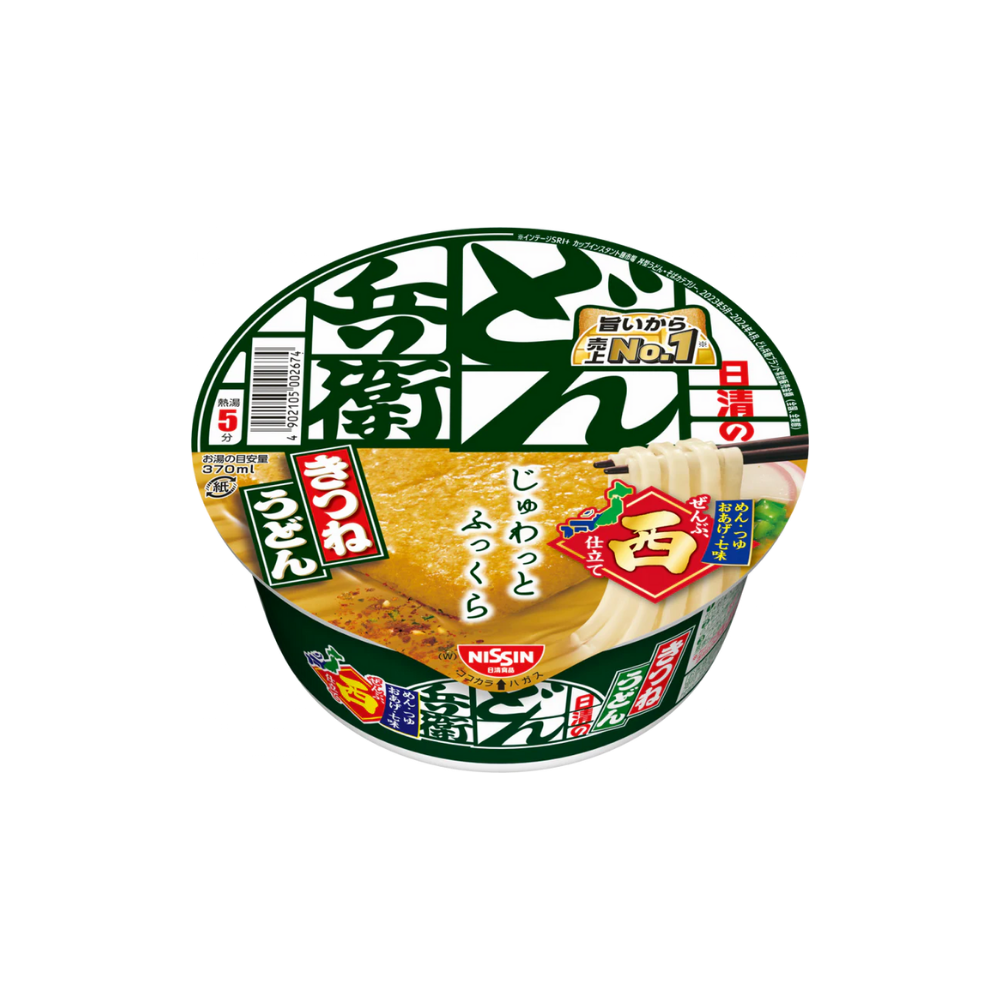
The specific YUBI100 product image above shows a West Japan marker. That does not prove every unit or future restock will be the western formula. Check the lid and variant supplied. Nissin’s current national listings show that eastern and western Kitsune Udon are separate products; the western listing is 417 kilocalories, while the eastern listing is 423 kilocalories. Those numbers illustrate that the versions are not interchangeable specifications.
Donbei Curry Udon
Donbei Curry Udon uses broad udon-style noodles in curry soup. Compare it directly with Cup Noodle Curry. Both are curry choices, but Cup Noodle Curry uses the brand’s familiar narrow cup noodles and includes potato among its listed toppings, while Donbei is built around udon. If your decision is primarily about noodle texture, this is an easier choice than comparing spice descriptions.
Nissin’s current Japanese listing gives 380 kilocalories for Curry Udon. Use the received package for the exact serving and preparation information, particularly if the packaging differs from the current manufacturer page.
Donbei Tempura Soba
Tempura Soba pairs soba-style noodles and dashi broth with a tempura topping. It suits readers who want a contrast between soup-softened noodles and a topping that can retain some texture depending on when it is added. Packet order matters, so follow the lid diagrams instead of assuming every sachet goes in before the water.
This is also a regional product. Nissin maintains separate current East and West Tempura Soba pages, so do not transfer a nutrition number or broth description from one regional package to another without checking the marker.
Donbei Duck Broth Soba
Duck Broth Soba is the deeper, savory soba option in the active assortment. Nissin’s current Japanese listing gives 413 kilocalories for the standard product. It is the choice to compare with Tempura Soba when you want the broth itself, rather than a fried topping, to define the bowl.
For households buying repeatedly, YUBI100 also lists a 12-pack Donbei box page with several selectable varieties. Confirm the chosen box variant before checkout; a box listing is a pack-size option, not a mixed assortment unless the page explicitly says so.
Regional picks: what East and West mean for Donbei
“Regional pick” is not just marketing language in Donbei. Nissin officially separates eastern and western versions of core products. Its Donbei East–West project explains that the boundary is based around Sekigahara and that noodles, broth, toppings and shichimi seasoning are differentiated. The company states that all four elements were region-specific from 2024.
The practical lesson is simple: look for the East or West marker on the lid. A western package should not be described using the eastern product’s exact calorie, salt or broth data, and vice versa. The distinction matters most for Kitsune Udon and Tempura Soba, which have clearly separate current product pages.
Broadly, the regional versions are designed around different dashi and seasoning preferences, but a shopping guide should avoid turning that into a simplistic “East is dark, West is light” rule. Current formulas contain multiple stock components and can be reformulated. The package marker and Nissin’s corresponding current page are the reliable way to identify what you have.
If you are ordering from outside Japan and care about the region, do not infer it only from the seller’s location. Check the product image and, when available, the selected variant description. Inventory can change between production lots.
Verified current specifications at a glance
The following figures are from Nissin’s current Japanese pages, not measurements by YUBI100. They identify the current manufacturer versions and may not match an older or regional package.
| Current Japanese product | Total / noodle weight | Energy per serving | Boiling water listed |
|---|---|---|---|
| Cup Noodle Original | 78 g / 65 g | 364 kcal | 280 mL |
| Cup Noodle Seafood | 75 g / 60 g | 338 kcal | 300 mL |
| Cup Noodle Curry | 87 g / 60 g | 423 kcal | 290 mL |
| Nissin Yakisoba U.F.O. | 128 g / 100 g | 555 kcal | 460 mL |
| Raoh Backfat Shoyu | 113 g / 75 g | Check current package | 400 mL |
| Raoh Toro-juku Miso | 118 g / 75 g | Check current package | 400 mL |
These values are useful for comparing serving formats, but calories alone do not explain satiety, flavor or dietary fit. Salt equivalent also varies and should be checked on the exact cup. If sodium intake is a concern, consult the package nutrition panel and an appropriate health professional rather than using a general ranking article as dietary advice.
How to prepare each style safely
| Style | Core preparation pattern | Detail to verify on the package |
|---|---|---|
| Cup Noodle | Open to the fill line, add boiling water, close lid, wait | Water amount and waiting time |
| U.F.O. | Add boiling water, close, drain through the lid, add sauce and seasoning | Packet order, drainage direction and waiting time |
| Raoh | Add specified packets at the labeled stage, add boiling water, finish the soup | Which packets go in before or after water |
| Donbei | Arrange topping and packets as shown, add boiling water, finish according to lid | Regional product, topping timing and waiting time |
Use a stable, heat-resistant surface. Open only as far as the package directs before adding water, and keep hands away from steam and the drainage outlet. A microwave is not a substitute for boiling-water instructions unless the exact package explicitly permits microwave preparation. Do not place a sealed cup in a microwave.
The printed fill line is more reliable than guessing by sight. Too little water concentrates soup and salt; too much weakens flavor and can create a spill. For soup noodles, stir thoroughly so powder at the bottom dissolves. For U.F.O., drain completely enough for the sauce to coat the noodles, but do not press or shake a hot cup in a way that makes the lid unsafe.
Ingredients and allergens: why the flavor name is not enough
Instant noodles are multi-component foods. The noodle block, powdered soup, liquid sauce, toppings and finishing seasoning can each introduce separate ingredients and allergens. A product called “Seafood” may also contain pork or dairy components; a curry cup may contain peanut or apple; and a soy-sauce product can contain wheat.
Nissin’s current Cup Noodle Original allergen declaration includes shrimp, wheat, egg, dairy, sesame, soy, chicken and pork. The current Curry list also includes peanut and apple. These examples show why a shopper should never rely on the English flavor name as an allergen screen.
Formulas and factory statements can change, and translation stickers may summarize rather than reproduce every nuance of the Japanese label. If you have a food allergy, check the complete label on the exact item before eating. When necessary, compare the product code with the manufacturer’s current allergen information. Do not assume that two flavors in one Shopify listing share an ingredient list.
Dietary labels such as vegetarian, vegan, halal or gluten-free should not be inferred. Several products discussed here list pork, chicken, seafood, egg or dairy ingredients, and all of the featured noodle families require exact-label review. If a certification is essential, look for the relevant mark on the package rather than relying on a category page.
Humidity & sweat resistance
“Humidity & sweat resistance” is not a performance claim for food. For instant noodles, the meaningful issue is storage integrity in hot, humid climates. The cups and packets are dry products, but the noodles and seasoning still need protection from moisture, heat, pests and damaged seals.
Keep unopened cups in a cool, dry place away from direct sunlight and strong odors. Do not leave them in a hot vehicle, on a balcony, beside a stove or in a damp utility area. In tropical homes, a closed cupboard away from steam is more suitable than an open shelf beside a kettle. If an outer cup is crushed, the lid is lifting, a packet is leaking, or the seal appears compromised, do not treat the product as normal simply because it is within its date.
Sweaty hands and condensation can also make a cup slippery during preparation. Dry the work surface, steady the container and keep the drainage opening pointed away from the body. This matters particularly for U.F.O., which requires handling the cup while it contains very hot water.
Once opened and prepared, instant noodles are intended to be eaten promptly. Do not prepare a cup and leave it at warm room temperature for later. Leftover safety depends on time and temperature conditions that a general article cannot verify.
Getting it outside Japan
Before ordering Japanese instant noodles internationally, check three things: whether food can be shipped to your destination, whether the specific animal-derived ingredients are restricted, and whether the carrier accepts the parcel. A commercially sealed cup is convenient, but sealed packaging does not create a universal customs exemption.
For the United States, FDA says prior notice must be provided for food imported or offered for import, including shipments through international mail. In ordinary e-commerce, the shipper or logistics provider may handle parts of the process, but the buyer should still provide accurate delivery details and respond to carrier requests. U.S. admissibility can also involve labeling and ingredient review.
For the European Union, personal-import rules restrict meat, milk and products containing them when arriving from most non-EU countries, including goods sent by post. Because several noodles in this guide contain pork, chicken or dairy ingredients, do not assume that a small personal parcel will be accepted. Check the destination country’s customs and food-safety guidance before ordering.
Singapore Food Agency rules distinguish food categories and list approved sources and quantity limits for private consumption. Its current public list treats foods containing meat as meat products, while fish, egg and other categories have their own conditions. A noodle cup with a pork topping cannot be assessed merely as “dry noodles.” Review the exact ingredient panel and the latest SFA list.
Other countries, including Malaysia and the Philippines, have their own rules. Customs decisions can depend on ingredient, quantity, value, labeling and whether the shipment appears personal or commercial. Regulations also change, so this article does not quote a fixed foreign-currency price, duty or delivery promise.
At checkout, confirm the selected flavor, unit count and destination. A multi-variant page is not a guarantee that every flavor can be shipped to every country. If you are building a broader snack parcel, the Japanese konjac jelly guide explains another product category with different texture and handling considerations.
Which one should you buy?
Use this short decision path:
- Choose Cup Noodle Original if you want the classic reference cup.
- Choose Cup Noodle Seafood for a creamy seafood-and-pork soup direction.
- Choose Cup Noodle Curry for thick curry soup in the standard cup format.
- Choose U.F.O. if you want drained, sauce-coated noodles without broth.
- Choose Raoh Shoyu or Miso if non-fried ramen-style noodles are the priority.
- Choose Donbei Kitsune Udon for broad noodles and fried tofu in dashi.
- Choose Donbei Tempura Soba or Duck Broth Soba if soba is the main attraction.
- Check East or West labeling when regional Donbei differences matter to you.
For a mixed household order, variety usually creates more value than buying several near-identical cups. One Cup Noodle, one U.F.O., one Raoh and one Donbei show four distinct formats. After that first comparison, a Donbei box makes more sense if you already know which variant you want.
FAQ
Is Nissin U.F.O. a soup noodle?
No. Standard U.F.O. is yakisoba prepared by adding hot water and then draining it before mixing in the sauce. Follow the lid instructions carefully and keep the drainage opening away from your body.
What is the difference between Cup Noodle Curry and Donbei Curry Udon?
The clearest difference is the noodle format. Cup Noodle Curry uses the familiar Cup Noodle-style noodles in a thick curry soup, while Donbei Curry Udon centers broad udon-style noodles. Check each package for its current toppings, allergens and preparation.
Are Raoh noodles fried?
Nissin describes the current Japanese Raoh Backfat Shoyu and Toro-juku Miso products as using non-fried noodles. That statement should not be generalized to every Raoh item or older package; verify the exact variant.
Why do some Donbei cups say East or West?
Nissin produces region-specific versions. Its official explanation states that noodles, broth, toppings and shichimi differ, with the division based around Sekigahara. Look for the regional marker rather than assuming the formula from the product name alone.
Are Japanese instant noodles vegetarian or halal?
Do not assume so. Products in this guide can contain meat, seafood, egg, dairy and other animal-derived ingredients. Check the exact ingredient and certification labels on the package.
Can instant noodles be shipped internationally?
Sometimes, but the answer depends on the destination and the ingredients. Products containing meat, dairy, egg or seafood may face additional restrictions. Check current customs and food-import rules before ordering.
Final takeaway
The best Japanese instant noodle is the format that matches the meal you want. Cup Noodle is the straightforward soup cup, U.F.O. is the bold drained-noodle option, Raoh is the non-fried ramen-style choice, and Donbei is where udon, soba and regional dashi distinctions become central.
Start with one product from each family if you want a meaningful comparison. Read the selected variant, regional marker, ingredient panel and preparation diagrams before cooking. That approach is more reliable than a universal ranking—and much more useful than assuming every Japanese cup noodle is the same.
Manufacturer and import references
- Nissin Cup Noodle brand and current products
- Nissin Yakisoba U.F.O. current standard product
- Nissin Raoh Backfat Shoyu
- Nissin Raoh Toro-juku Miso
- Nissin Donbei East–West differences
- U.S. FDA prior notice for imported foods
- European Commission personal imports of animal products
- Singapore Food Agency private-consumption import list